
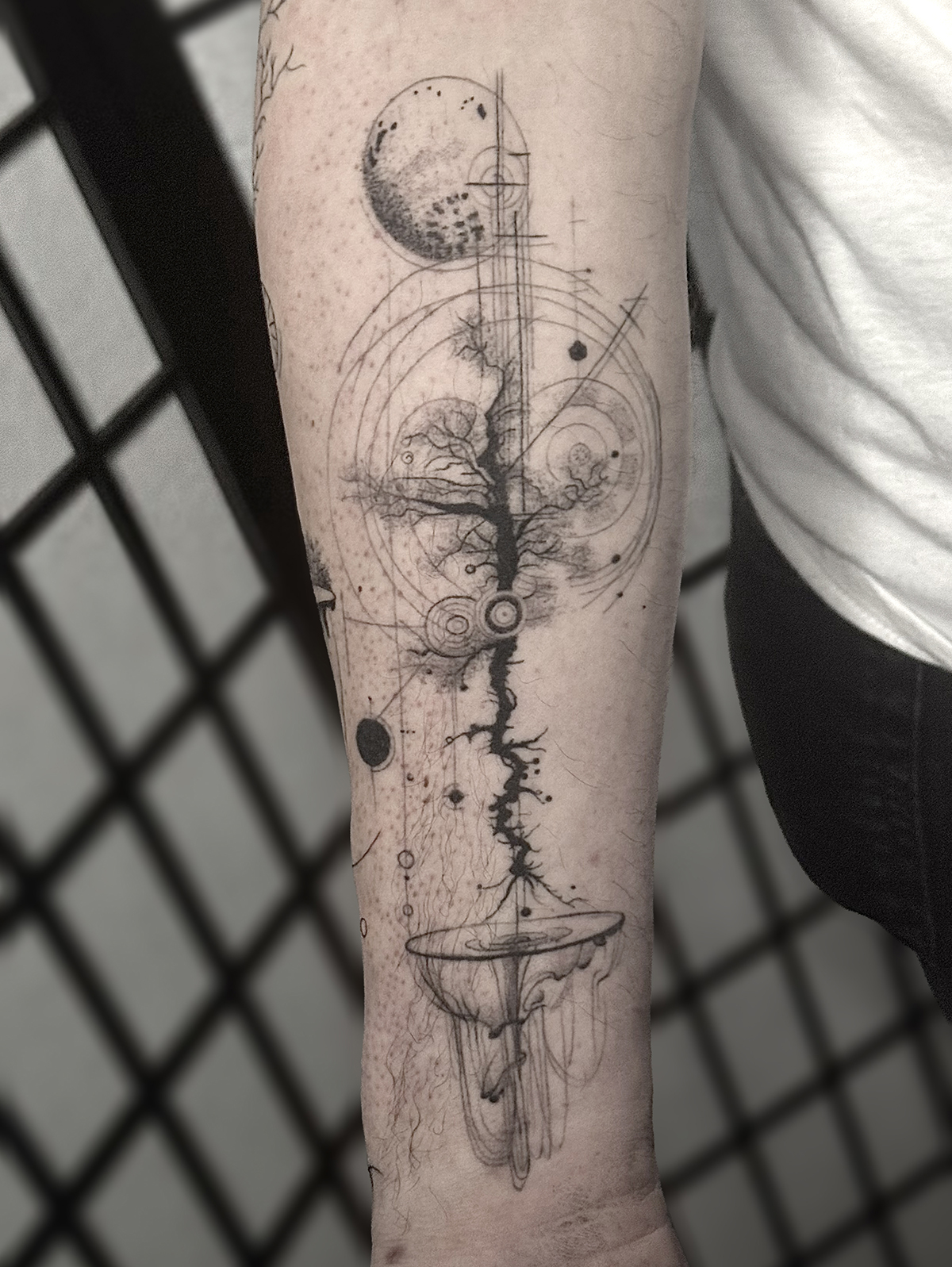
Not every tattoo needs bold outlines, heavy shading, or strong color to make an impact.
Fine line tattoos are known for thin, precise lines, delicate details, and a clean, modern appearance.
Flowers, snakes, botanical designs, and small black and grey tattoos are popular choices—but fine line tattooing can go much further.
At Oyabun Tattoo in San Diego, we especially love combining fine line tattooing with Japanese tattoo imagery.
Japanese subjects such as koi, dragons, Hannya masks, kitsune, samurai, snakes, tigers, peonies, chrysanthemums, and cherry blossoms can be reinterpreted with lighter lines and subtle shading.
The result keeps the character and movement of Japanese art while creating something more delicate and contemporary.
What Is a Fine Line Tattoo?
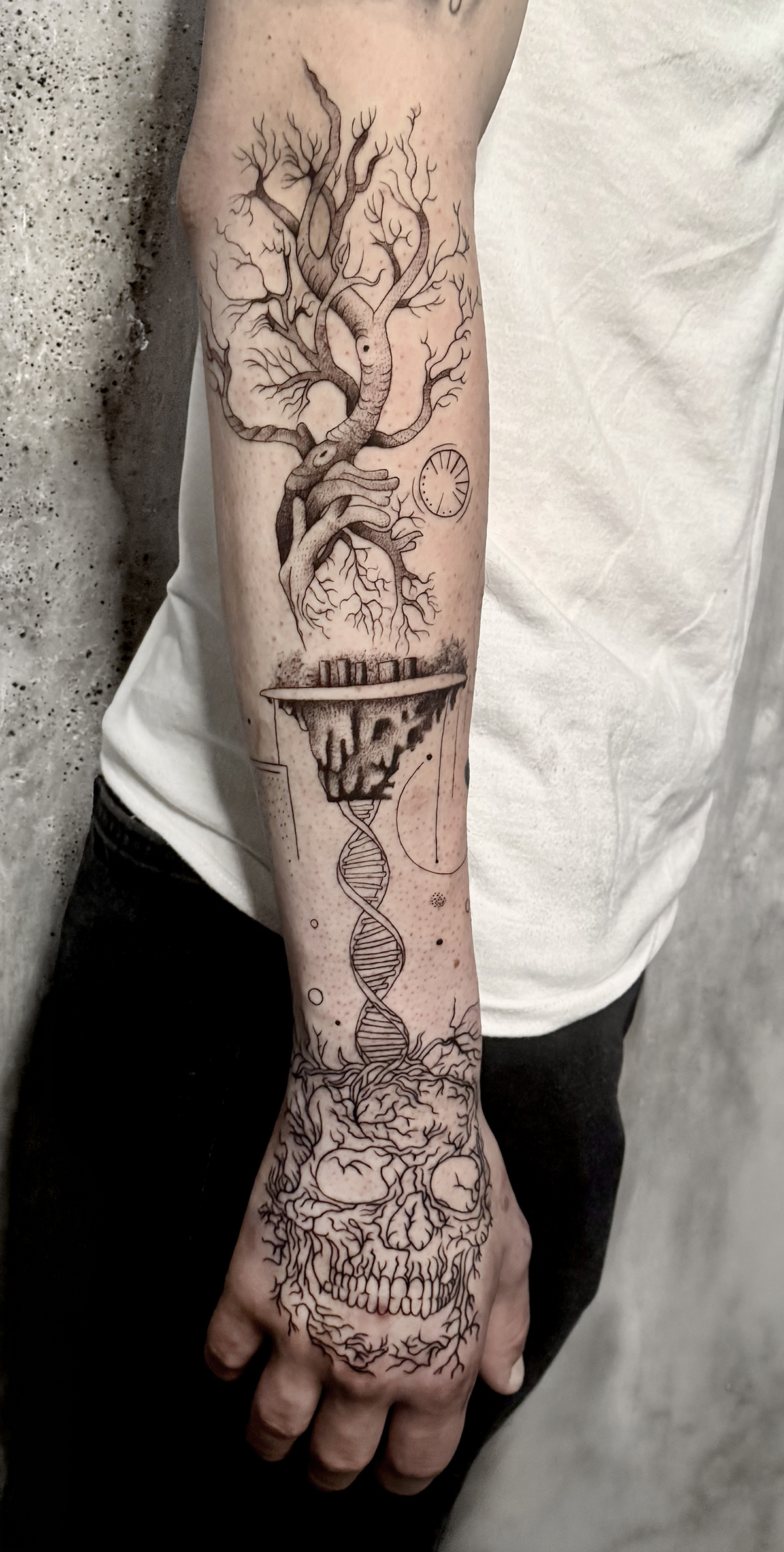
Fine line tattoos use thin, carefully controlled lines rather than the bold outlines and heavy saturation commonly seen in traditional tattooing.
Typical characteristics include:
* Thin, clean lines
* Delicate details
* Subtle black and grey shading
* Open skin and negative space
* Precise line work
* Elegant compositions
Fine line does not necessarily mean tiny.
A tattoo can use delicate lines while still becoming a larger composition on the forearm, upper arm, shoulder, thigh, or back.
In fact, detailed subjects often benefit from more space.
Japanese Fine Line Tattoos
Japanese tattooing is traditionally known for bold outlines, strong colors, powerful contrast, and large compositions.
Fine line tattooing offers another way to approach the same imagery.
Instead of simply shrinking a traditional Japanese tattoo, the subject can be redesigned specifically for fine line work.
A Japanese dragon, for example, can focus on its flowing body, face, claws, whiskers, and scales while using open skin and subtle shading instead of heavy backgrounds and saturated color.
A Hannya mask can retain its dramatic expression using delicate line work and selective black and grey shading.
A koi can use flowing contour lines and subtle scales to create movement without making the tattoo visually heavy.
This approach works especially well for people who love Japanese imagery but prefer something lighter and more subtle than traditional Japanese tattooing.
Japanese Subjects That Work Well as Fine Line Tattoos
Many traditional Japanese tattoo subjects translate beautifully into fine line designs:
* Koi – flowing bodies, scales, fins, and water create natural movement.
* Dragons – long shapes, claws, whiskers, and scales offer incredible detail.
* Hannya & Kitsune masks – strong facial structures remain recognizable even without heavy color.
* Geisha – elegant facial features, traditional hairstyles, kimono patterns, fans, and floral elements can create highly detailed yet delicate compositions. Fine line work is especially effective for capturing the graceful and refined character of geisha imagery.
* Japanese snakes – ideal for wrapping naturally around arms and legs.
* Samurai – armor, helmets, swords, and fabric details can create sophisticated larger pieces.
* Peonies & chrysanthemums – traditional Japanese flowers work beautifully with delicate line work.
* Cherry blossoms – naturally suited to smaller, lighter compositions.
* Tigers & cranes – strong Japanese imagery that can be simplified into elegant black and grey designs.
The key is knowing what details to keep and what to simplify.
Trying to squeeze every scale of a dragon, every pattern of a geisha’s kimono, or every detail of samurai armor into a tiny tattoo can make the design overcrowded.
Good fine line tattooing isn’t about making everything as small as possible.
It’s about making every line necessary.
Fine Line Flowers & Snake Tattoos
Flowers and snakes remain two of the most popular fine line tattoo subjects.
Roses, peonies, cherry blossoms, chrysanthemums, lotus flowers, and botanical designs naturally work with delicate lines.
Snakes are equally effective because their long shapes can follow the curves of the arm, thigh, calf, or shoulder.
They can also create a bridge between contemporary fine line tattooing and Japanese art.
For example, a fine line snake combined with a Japanese peony or chrysanthemum can create a modern tattoo while maintaining a distinctly Japanese character.
Black & Grey Fine Line Tattoos
Fine line and black and grey tattooing naturally complement each other.
Soft grey shading can create depth without overpowering delicate lines.
This works particularly well with Japanese imagery.
A dragon can have subtle shading beneath its scales. A Hannya can use darker areas around the eyes and mouth. A koi can use soft grey tones to create dimension while leaving areas of open skin.
The balance is important.
Too much shading can make the tattoo heavy, while too little contrast can make a detailed design difficult to read.
Fine Line Tattoos Can Leave More Options for Future Cover-Ups
Tattoo tastes can change over time.
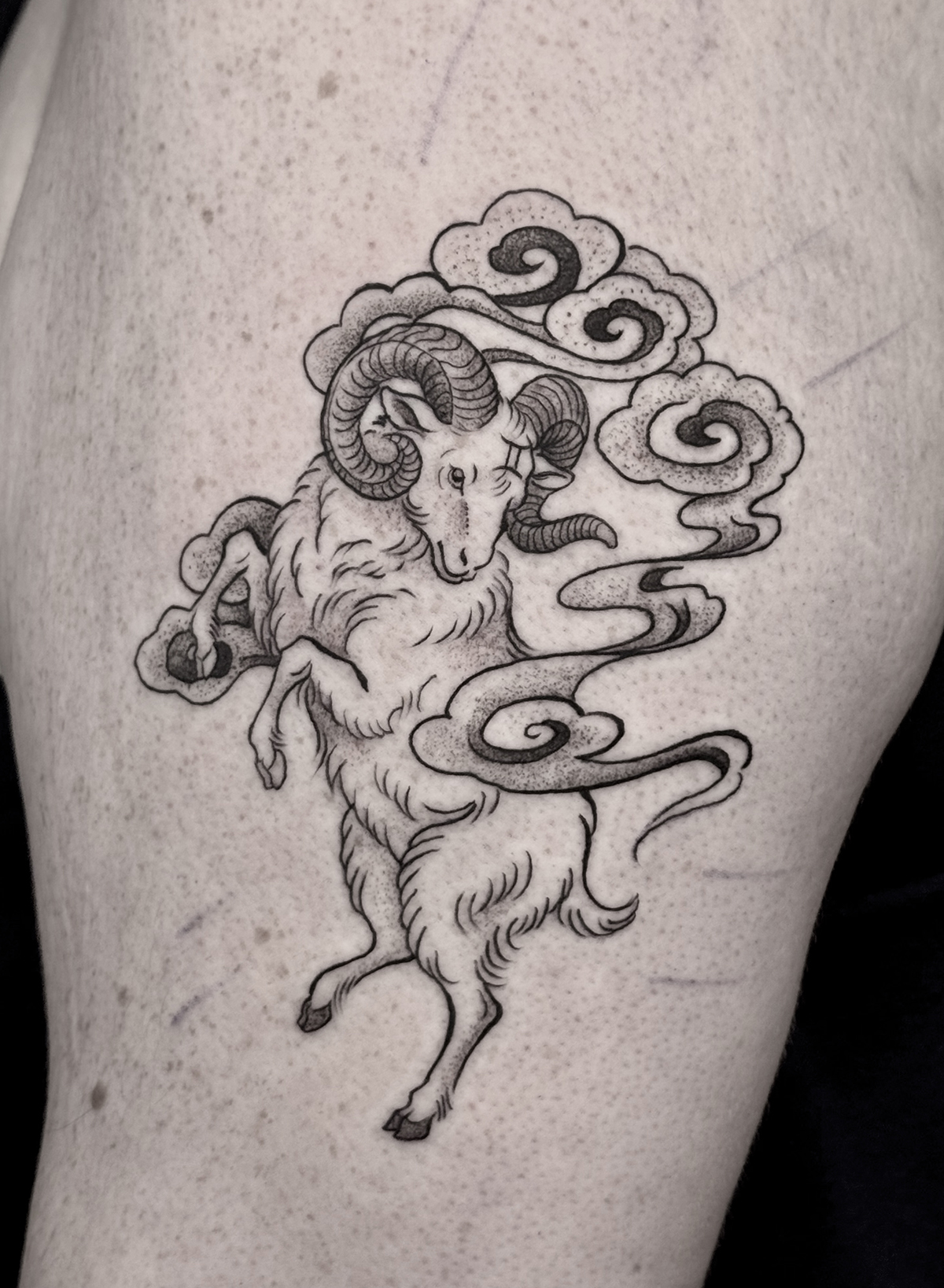
One potential advantage of lighter fine line and black and grey tattoos is that they may leave more options if you eventually want to rework, expand, or cover the tattoo.
This doesn’t mean every fine line tattoo is easy to cover. Size, placement, ink density, aging, and the new design all matter.
However, a relatively light fine line tattoo can generally provide more flexibility than a heavily saturated tattoo with thick black outlines, dense shading, or strong color.
Why?
A cover-up has to visually overpower the tattoo underneath it.
The darker and more saturated the original tattoo is, the more limitations the new design may have.
A lighter tattoo may potentially be reworked, expanded, incorporated into a larger composition, or covered with a darker and bolder tattoo later.
For someone who loves Japanese tattoos but isn’t ready to commit to a large traditional piece, a Japanese fine line tattoo can be an interesting starting point.
Choosing a Japanese Fine Line Tattoo Artist in San Diego
When searching for a fine line tattoo artist in San Diego, don’t judge the work only by how small the tattoos are.
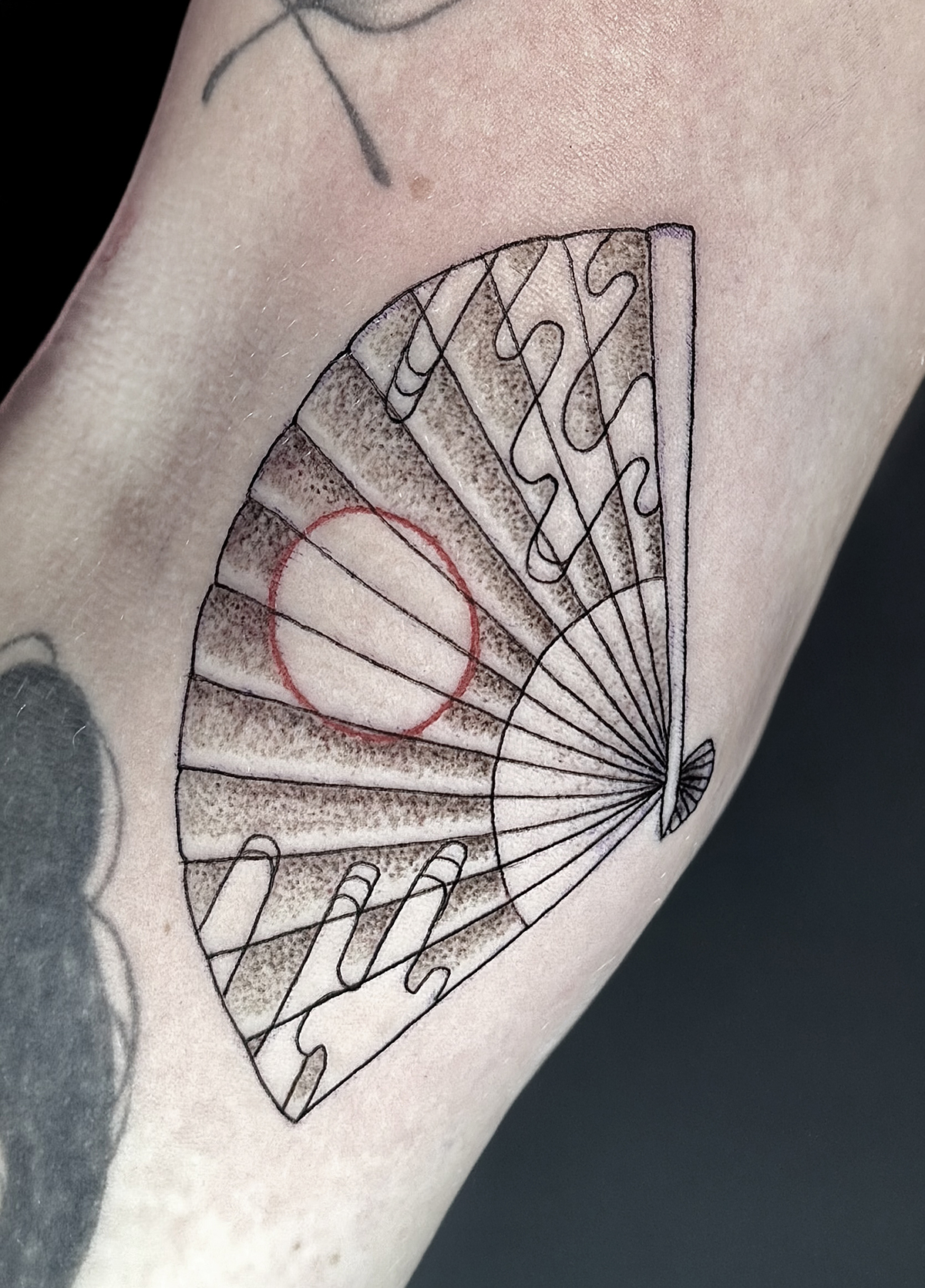
Look at whether the lines are clean, the curves are smooth, and the design remains readable.
For Japanese fine line tattoos, there’s another important question:
Does the artist understand Japanese tattoo imagery?
Knowing how to make thin lines and knowing how to design a Japanese dragon are two different skills.
Japanese imagery has its own composition, movement, symbolism, and relationships between subjects.
At Oyabun Tattoo, Japanese tattooing is a major part of what we do, and our team also includes artists experienced in fine line and delicate tattoo work.
That combination allows us to approach traditional Japanese imagery through a lighter, more contemporary style.
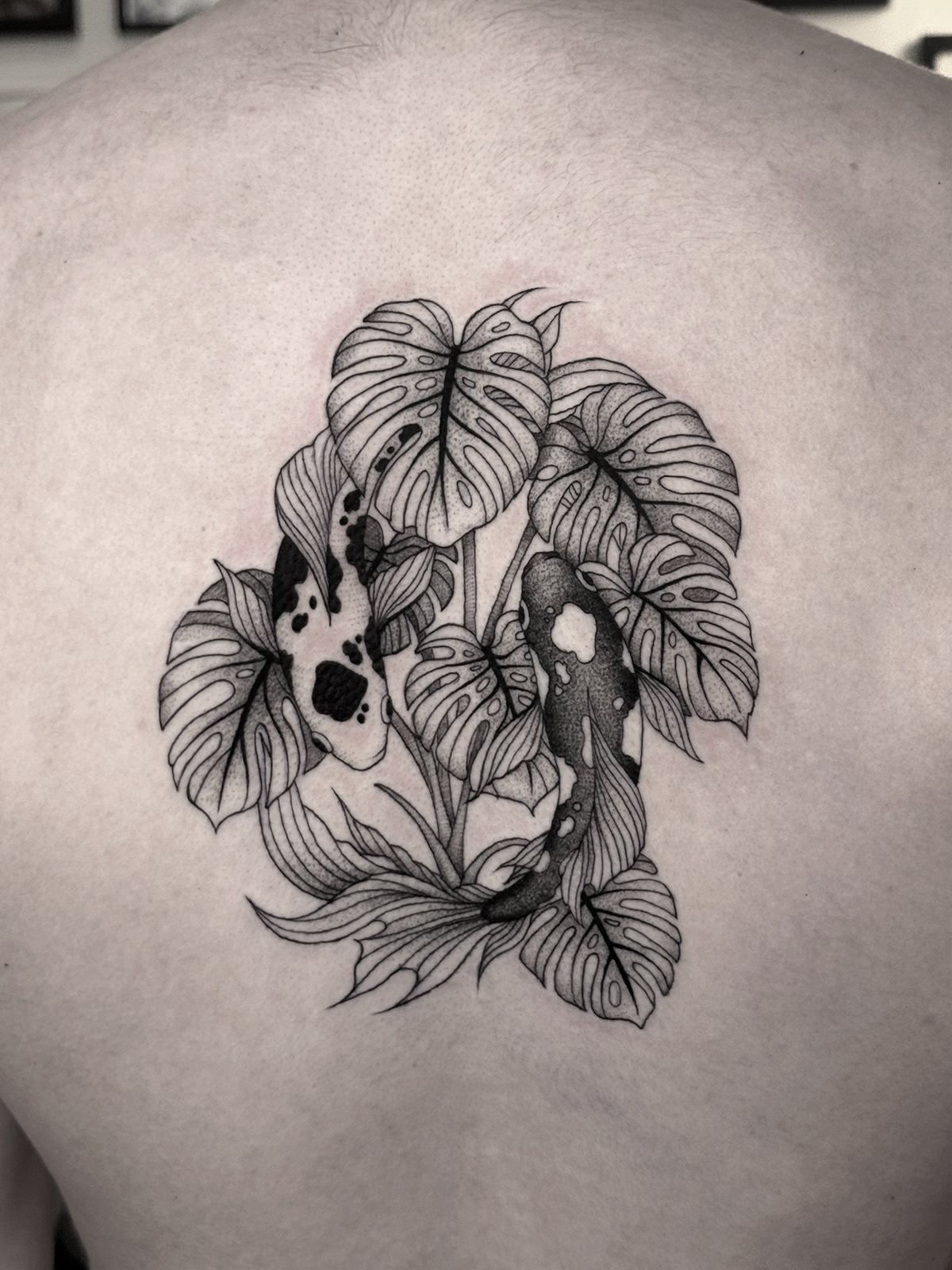
Fine Line & Japanese Fine Line Tattoos at Oyabun Tattoo San Diego
Oyabun Tattoo is located on Clairemont Mesa Boulevard in central San Diego, conveniently accessible from Kearny Mesa, the Convoy District, Mira Mesa, Balboa Avenue, MCAS Miramar, and Interstate 163.
Our team works across multiple styles, including fine line, Japanese tattooing, black and grey, color, and custom tattooing. Combining fine line techniques with Japanese imagery requires more than simply using a small needle—it takes an understanding of precision, composition, movement, and how traditional Japanese subjects should flow with the body.
Whether you’re interested in a delicate flower, fine line snake, Japanese dragon, koi, Hannya, kitsune, geisha, samurai, peony, chrysanthemum, cherry blossom, or a larger custom composition, our artists can help develop your idea and match you with the right artist.
Small and relatively simple fine line tattoos may sometimes be available as same-day walk-ins, while more detailed Japanese designs may require an appointment or consultation.
If you’re looking for a fine line tattoo in San Diego, Japanese fine line tattoo, Japanese fine line tattoo artist in San Diego, or fine line geisha tattoo, contact Oyabun Tattoo to discuss your idea and check artist availability.