
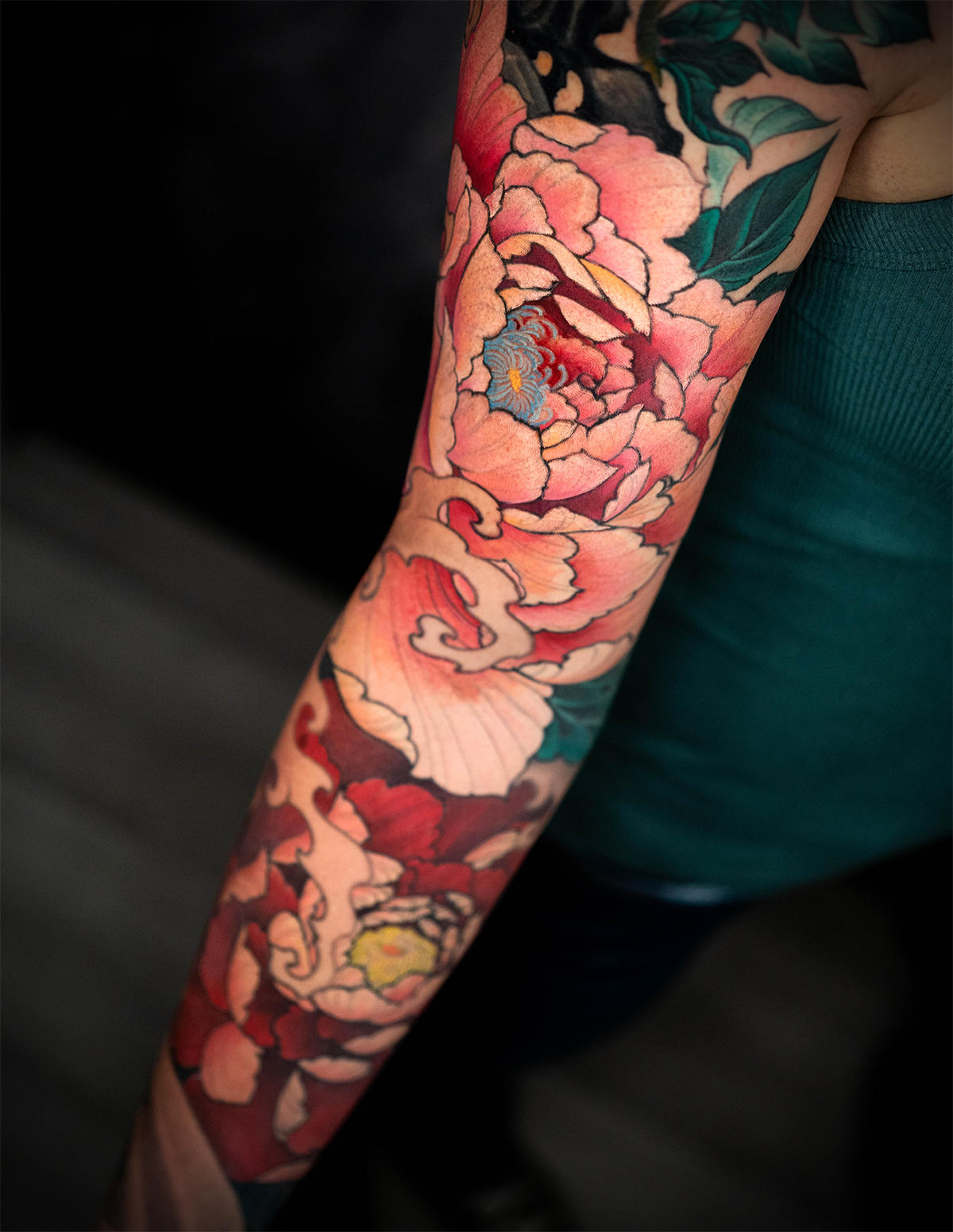
Japanese Flower Tattoos: Traditional Meanings, Symbolism & Design Ideas
When people think about traditional Japanese tattoos, dragons, koi fish, and tigers usually come to mind first. But in Japanese tattooing, flowers are just as important as the main subject.Flowers aren’t simply decorative. They help tell the story of the tattoo, create seasonal balance, and add layers of symbolism that have been part of Japanese art for centuries.
At Oyabun Tattoo, our artists carefully choose flowers to complement the overall composition rather than treating them as background elements. Whether you’re planning a full sleeve, ack piece, or smaller Japanese-inspired tattoo, understanding the meaning behind each flower can help you create a design that feels both authentic and personal.
Why Flowers Matter in Traditional Japanese Tattoos
In traditional irezumi, every element has a purpose.
A dragon may represent wisdom and strength, but pairing it with chrysanthemums creates a completely different mood than pairing it with cherry blossoms. Likewise, a koi swimming upstream surrounded by maple leaves tells a different story than one swimming through lotus flowers.
Rather than choosing flowers simply because they look beautiful, experienced Japanese tattoo artists consider symbolism, seasonality, movement, and how every element works together as one composition.
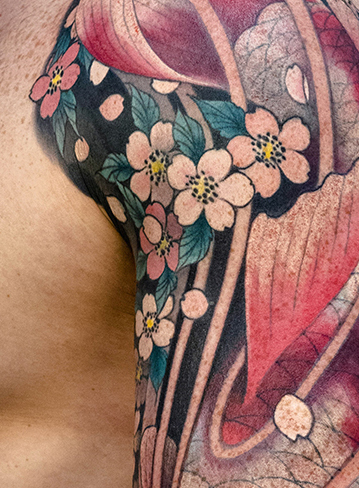
Cherry Blossoms (Sakura)
Cherry blossoms are one of the most recognizable symbols in Japanese culture.
Their brief blooming season reminds us that beauty, youth, and life itself are temporary. Because of this, sakura has long represented the acceptance of life’s impermanence.
In traditional Japanese tattooing, cherry blossoms are often paired with dragons, samurai, koi fish, and tigers to soften powerful imagery while adding movement throughout the design.
They’re especially popular in sleeves and back pieces because the falling petals naturally guide the viewer’s eye across the tattoo.
Peonies (Botan)
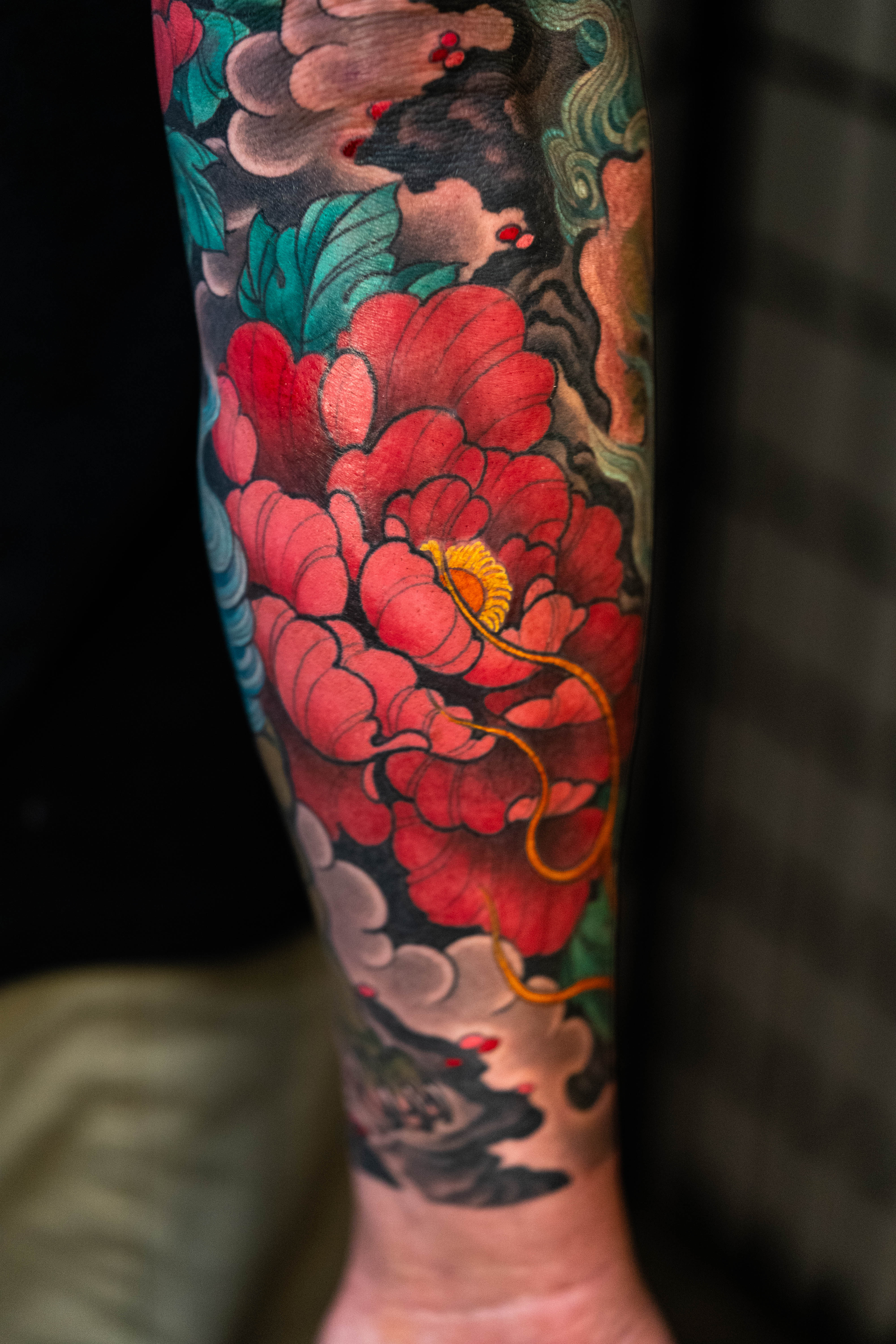
Often called the “King of Flowers,” peonies symbolize prosperity, honor, courage, and good fortune.
Despite their delicate appearance, peonies are frequently combined with fierce subjects like dragons, lions (foo dogs), and tigers. This contrast reflects an important idea found throughout Japanese art—strength and elegance can exist together.
Peonies are one of the most versatile flowers in Japanese tattooing and work beautifully in both bold color and black-and-gray designs.
Lotus Flowers (Hasu)
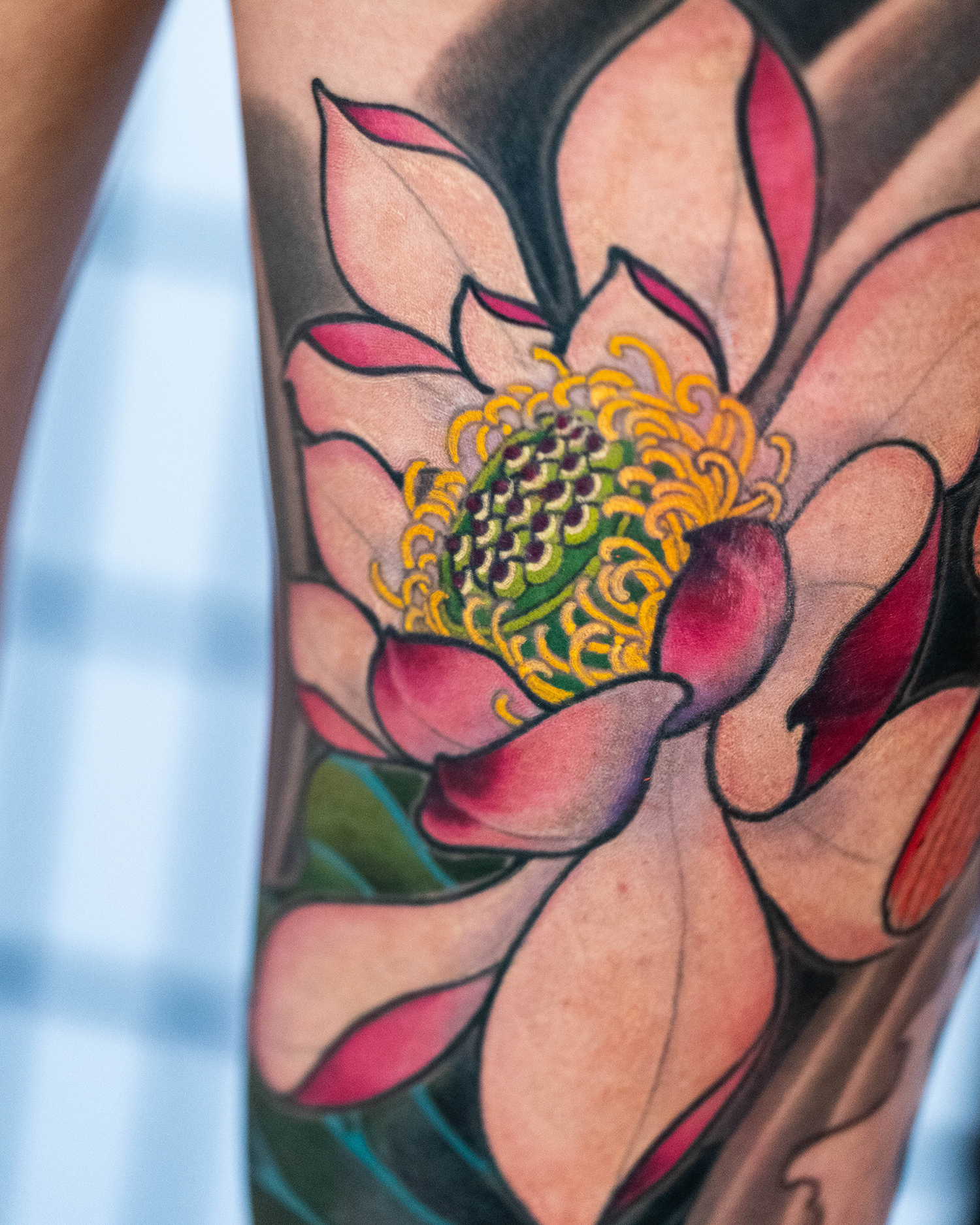
The lotus flower holds deep spiritual significance throughout Asia.
Growing from muddy water before blooming into a beautiful flower, it represents purity, personal growth, and enlightenment.
For many clients, lotus tattoos symbolize overcoming difficult experiences and emerging stronger than before.
Lotus flowers are often combined with koi fish, water, and Buddhist-inspired imagery to create peaceful, balanced compositions.
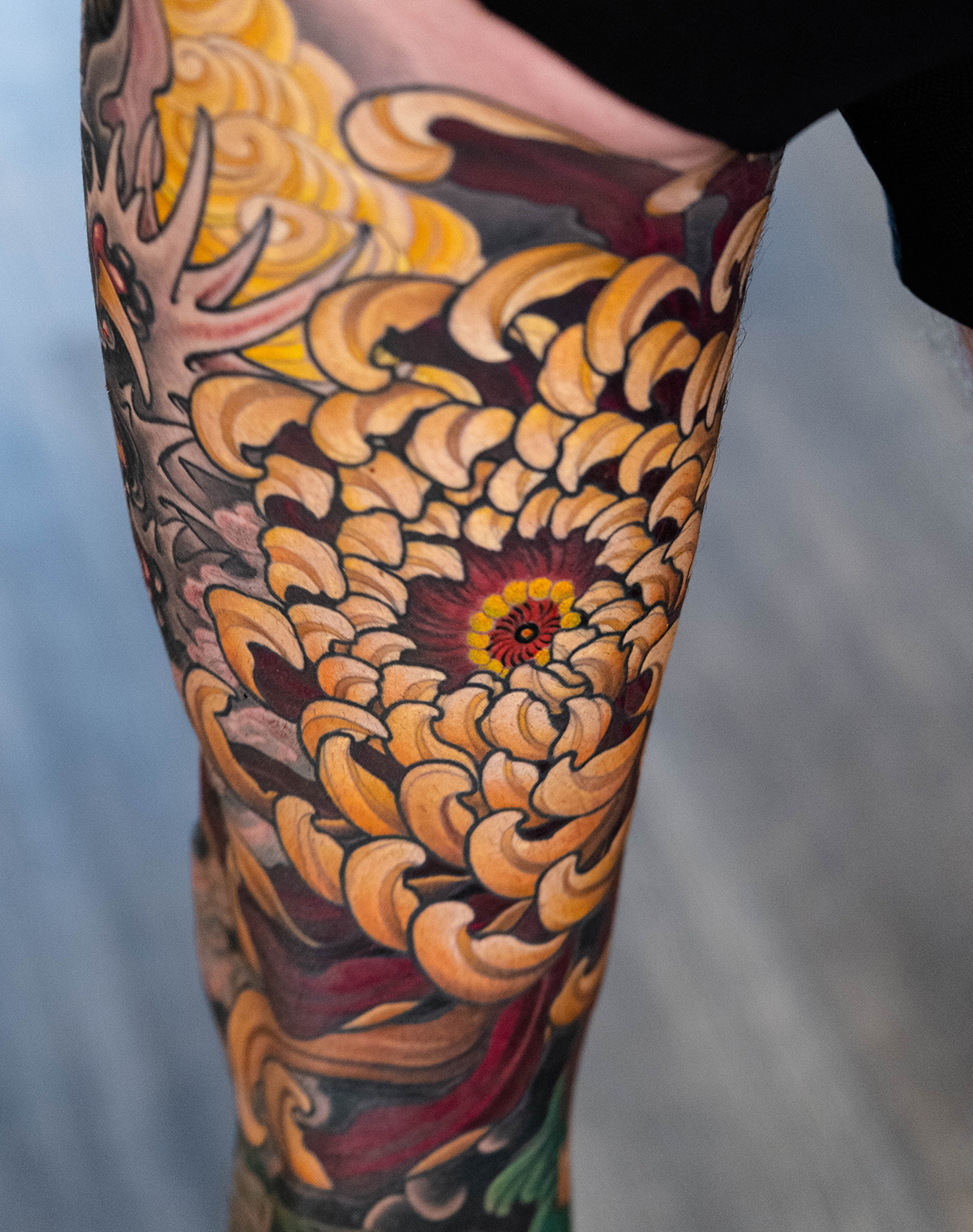
Chrysanthemums (Kiku)
Chrysanthemums have been associated with Japanese royalty for centuries and remain one of the country’s most respected floral symbols.
They commonly represent longevity, happiness, and resilience.
Unlike cherry blossoms, which celebrate life’s temporary nature, chrysanthemums often symbolize endurance and living a long, meaningful life.
Their layered petals also create beautiful movement in larger Japanese tattoo compositions.
Maple Leaves (Momiji)
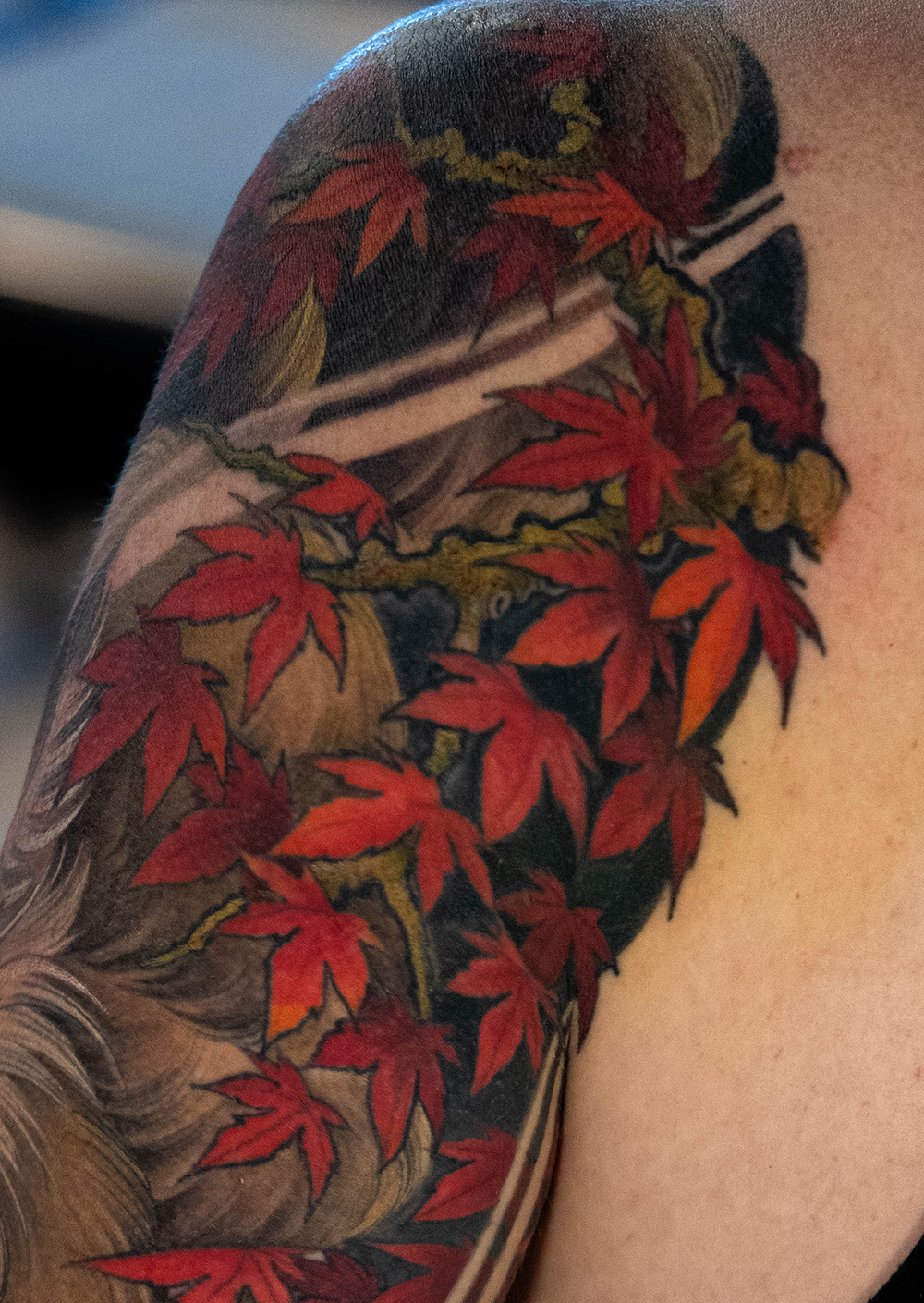
Although technically leaves rather than flowers, maple leaves play an important role in traditional Japanese tattooing.
They represent autumn, change, maturity, and the passing of time.
When paired with water, koi fish, or falling wind bars, maple leaves create some of the most dynamic seasonal compositions in Japanese tattoos.
Many collectors choose maple leaves to represent personal transformation or significant life changes.
Other Traditional Japanese Flowers
While the flowers above are the most common, traditional Japanese tattooing also includes many others, such as:
Each flower carries its own symbolism and can dramatically change the overall feeling of a tattoo.
Flowers Are Part of the Story—Not Just Decoration
One thing we often explain during consultations is that flowers are rarely chosen in isolation.
Instead, they’re selected to support the main subject and strengthen the overall composition.
For example:
In traditional Japanese tattooing, every element should feel connected. The best designs aren’t collections of separate symbols—they tell one complete visual story.
Frequently Asked Questions
What is the most popular flower in Japanese tattoos?
Cherry blossoms and peonies are the two flowers most commonly used in traditional Japanese tattooing because they pair naturally with larger subjects like dragons, koi fish, and tigers.
Can I combine different flowers in one Japanese tattoo?
Yes. Many traditional sleeves and bodysuits include multiple flowers to represent different seasons, life experiences, or symbolic meanings. The key is making sure the overall composition remains balanced.
Are flower tattoos only for women?
Not at all. In traditional Japanese tattooing, flowers are used in tattoos for both men and women. They’re considered an essential part of the overall composition rather than a gender-specific element.
How do I choose the right flower?
The best choice depends on both symbolism and design. An experienced Japanese tattoo artist will consider the subject, season, movement, and overall flow of the tattoo rather than selecting flowers based on appearance alone.
Choosing the Right Japanese Flower Tattoo
Traditional Japanese tattoos are about more than individual symbols—they’re about how every element works together.
The right flower can completely change the mood, balance, and meaning of a tattoo. Whether you’re drawn to the fleeting beauty of cherry blossoms, the strength of peonies, or the spiritual symbolism of the lotus, choosing flowers that fit your story will create a more timeless design.
At Oyabun Tattoo in San Diego, our artists specialize in custom Japanese tattoos, from sleeves and back pieces to full-body compositions. Every design is created specifically for the individual, respecting the traditions of Japanese tattooing while reflecting your personal story.
Ready to start your Japanese tattoo? Submit a consultation request today, and let’s design something meaningful that you’ll be proud to wear for life.