
Japanese Snake Tattoo Meaning: Symbolism, Traditional Designs & Modern Styles
The Japanese snake tattoo is one of the most powerful and versatile designs in traditional Japanese tattooing. Known as hebi (蛇) in Japanese, the snake has appeared throughout Japanese art, folklore, and tattoo culture for centuries.
In Japanese symbolism, the snake can represent protection, transformation, wisdom, good fortune, and rebirth.
Its long, flexible body also makes it ideal for tattooing. A snake can wrap naturally around the arm, leg, shoulder, or torso, creating movement while following the anatomy of the body.
At Oyabun Tattoo in San Diego, we specialize in custom Japanese tattooing, from traditional Japanese snake sleeves and back pieces to black and grey and fine line snake tattoos.
Japanese Snake Tattoo Meaning
The meaning of a Japanese snake tattoo can change depending on its pose, surrounding imagery, and personal interpretation.
Transformation and Rebirth
Because snakes shed their skin as they grow, they have become a natural symbol of renewal, transformation, and leaving the past behind.
Protection
In Japanese folklore, snakes can be associated with protective powers and may symbolize protection from misfortune and negative influences.
Wisdom and Adaptability
Snakes survive through awareness, patience, and instinct rather than brute force. They can represent wisdom, strategy, resilience, and the ability to adapt to change.
Good Fortune
Snakes have also been associated with prosperity and good fortune. The white snake has particularly strong connections with Benzaiten, a Japanese deity associated with wealth, music, art, and water.
Popular Japanese Snake Tattoo Designs
Japanese Snake Sleeve Tattoo
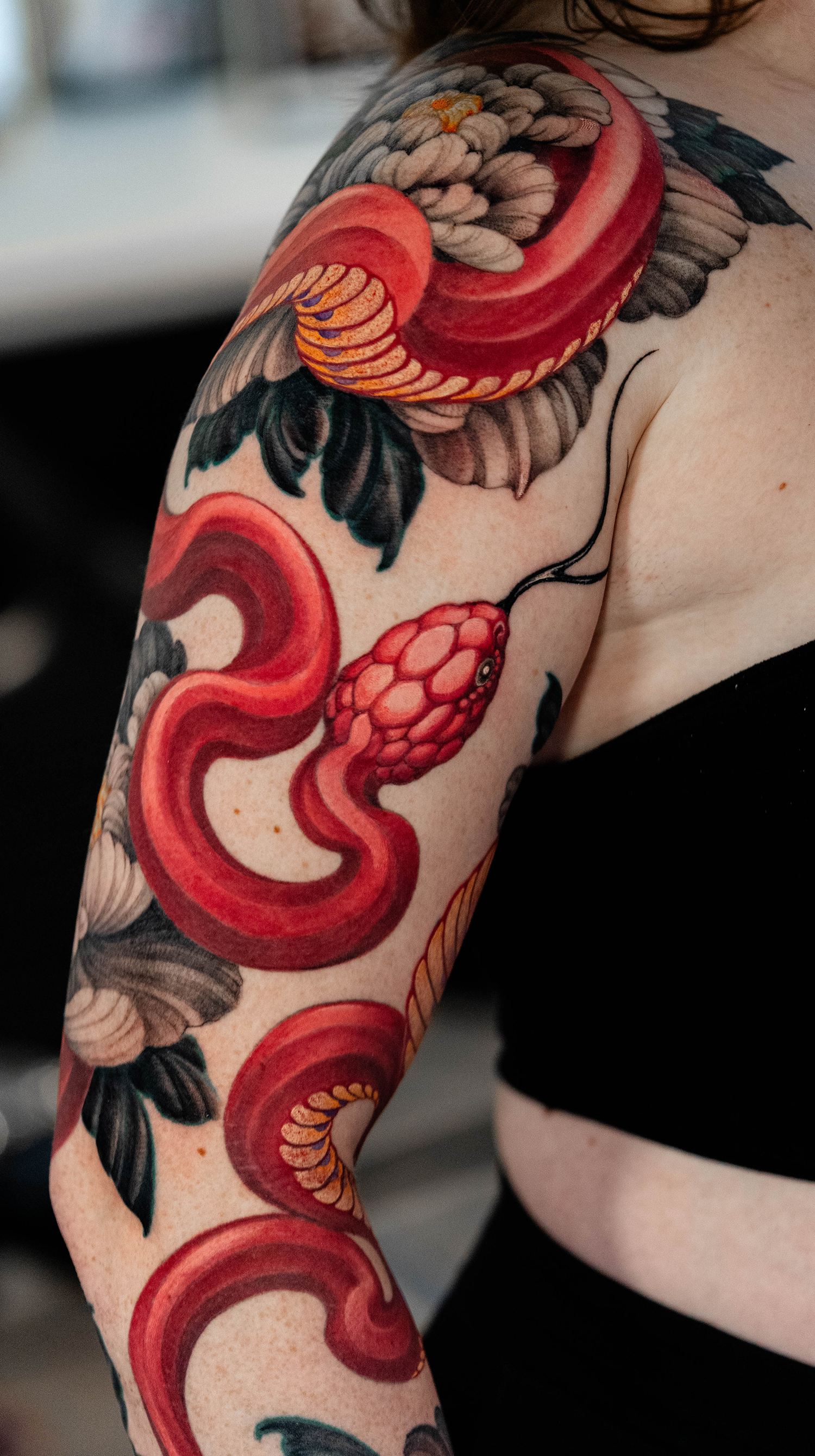
A Japanese snake sleeve tattoo takes advantage of the snake’s natural movement.
Its body can spiral around the arm while the head becomes a strong focal point. Flowers, rocks, wind, clouds, and other background elements can connect the composition into a complete sleeve.
This works especially well for both full sleeves and half sleeves.
Japanese Snake Leg Sleeve
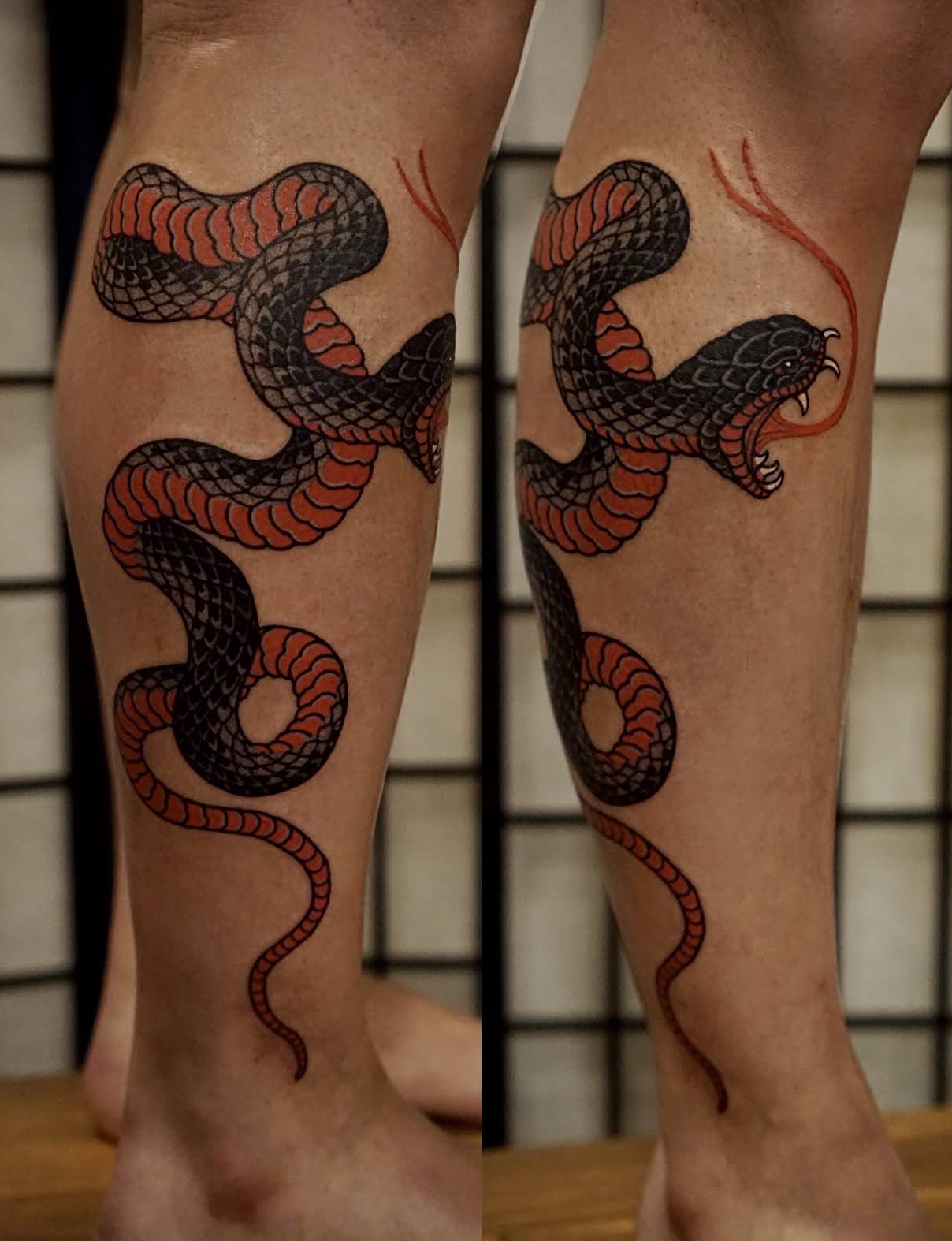
The leg provides more vertical space for a large snake composition.
The snake can climb or descend around the calf and thigh while interacting with flowers, rocks, waves, or wind. This creates a strong silhouette from multiple viewing angles.
Japanese Snake Back Piece
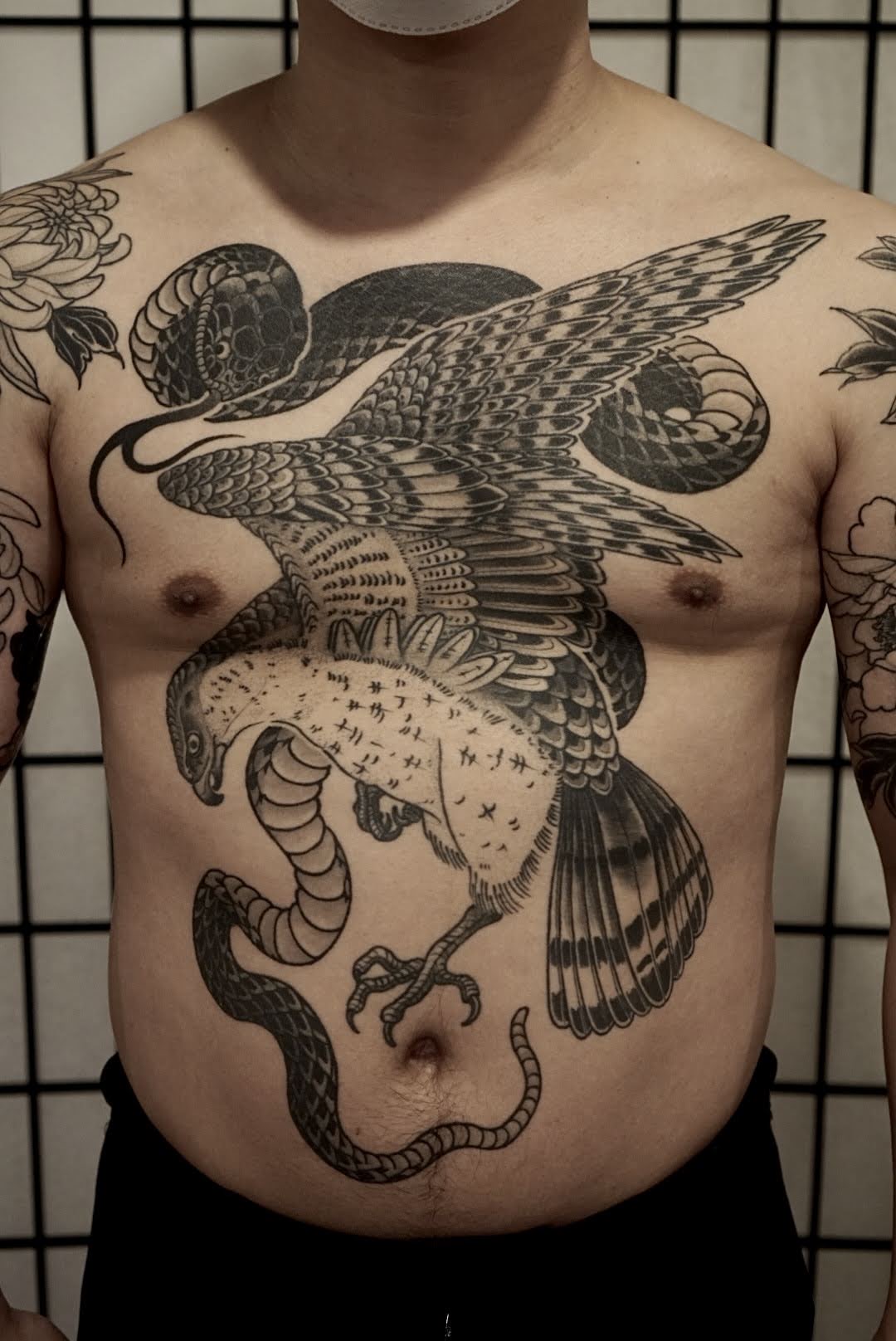
A Japanese snake back tattoo gives the artist enough space for more dramatic storytelling.
The snake can interact with Hannya masks, flowers, warriors, or supernatural imagery while maintaining the large flowing composition associated with traditional irezumi.
Elements That Pair Well with a Japanese Snake Tattoo
Supporting imagery can change both the meaning and visual character of a Japanese snake tattoo.
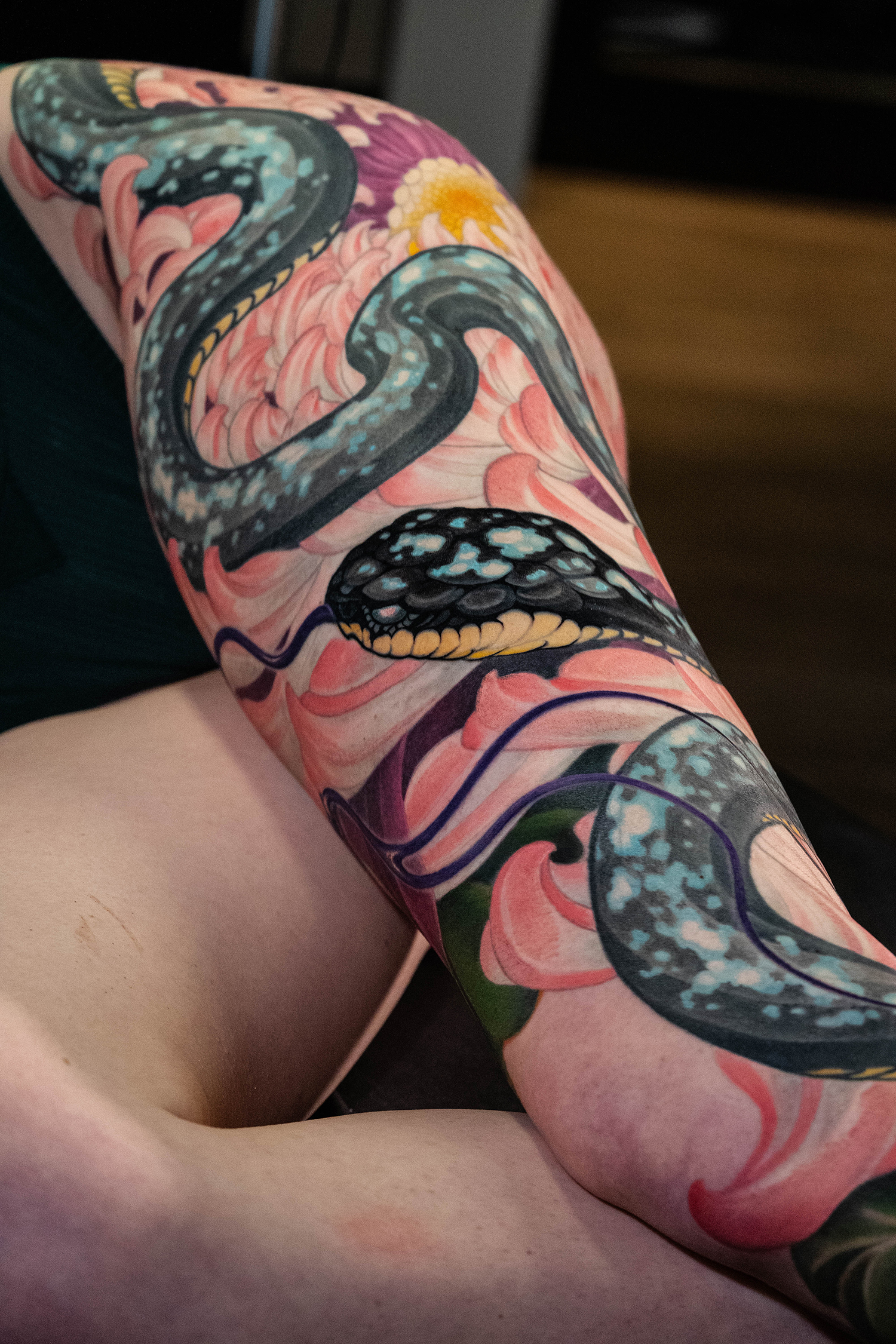
Peonies represent beauty, prosperity, courage, and good fortune. Their soft shapes create a strong contrast with the scales and movement of the snake.
Chrysanthemums symbolize longevity, endurance, and seasonal change.
Cherry blossoms represent the beauty and temporary nature of life, while maple leaves can represent change, maturity, and the passage of time.
A Hannya mask creates a darker composition associated with powerful emotions and transformation, while a skull can create a contrast between mortality and the snake’s symbolism of renewal.
Waves, wind, and clouds add movement and help connect larger Japanese compositions.
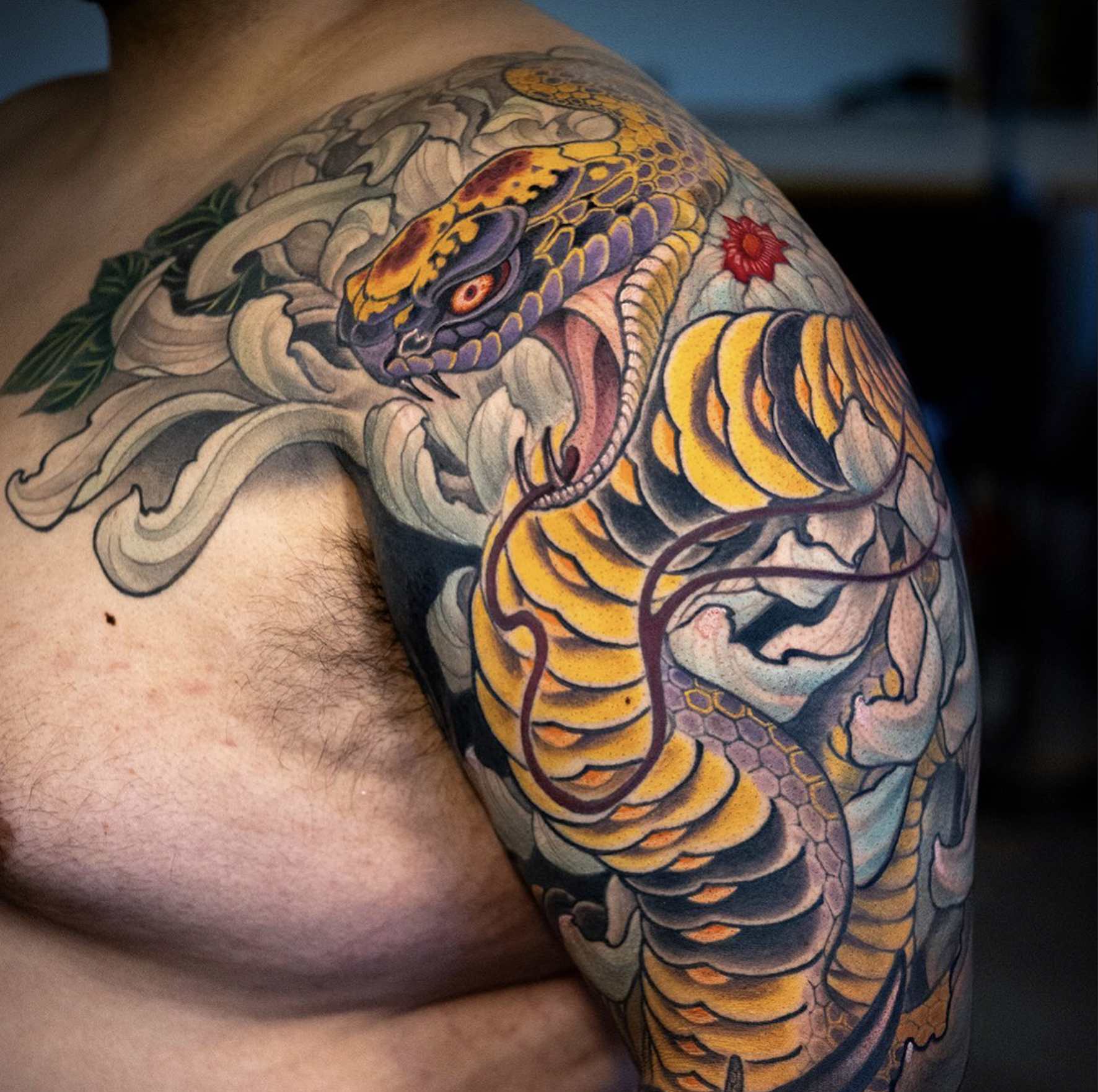
Black and Grey Snake Tattoos
Not every snake tattoo needs the full color palette of traditional Japanese tattooing.
A black and grey snake tattoo uses shading and different levels of black to create depth, texture, and contrast.
Snake scales, curved muscles, and overlapping sections of the body respond especially well to black and grey shading.
This style is a strong option for someone who appreciates the movement and symbolism of Japanese snake tattoos but prefers a darker or more restrained appearance.
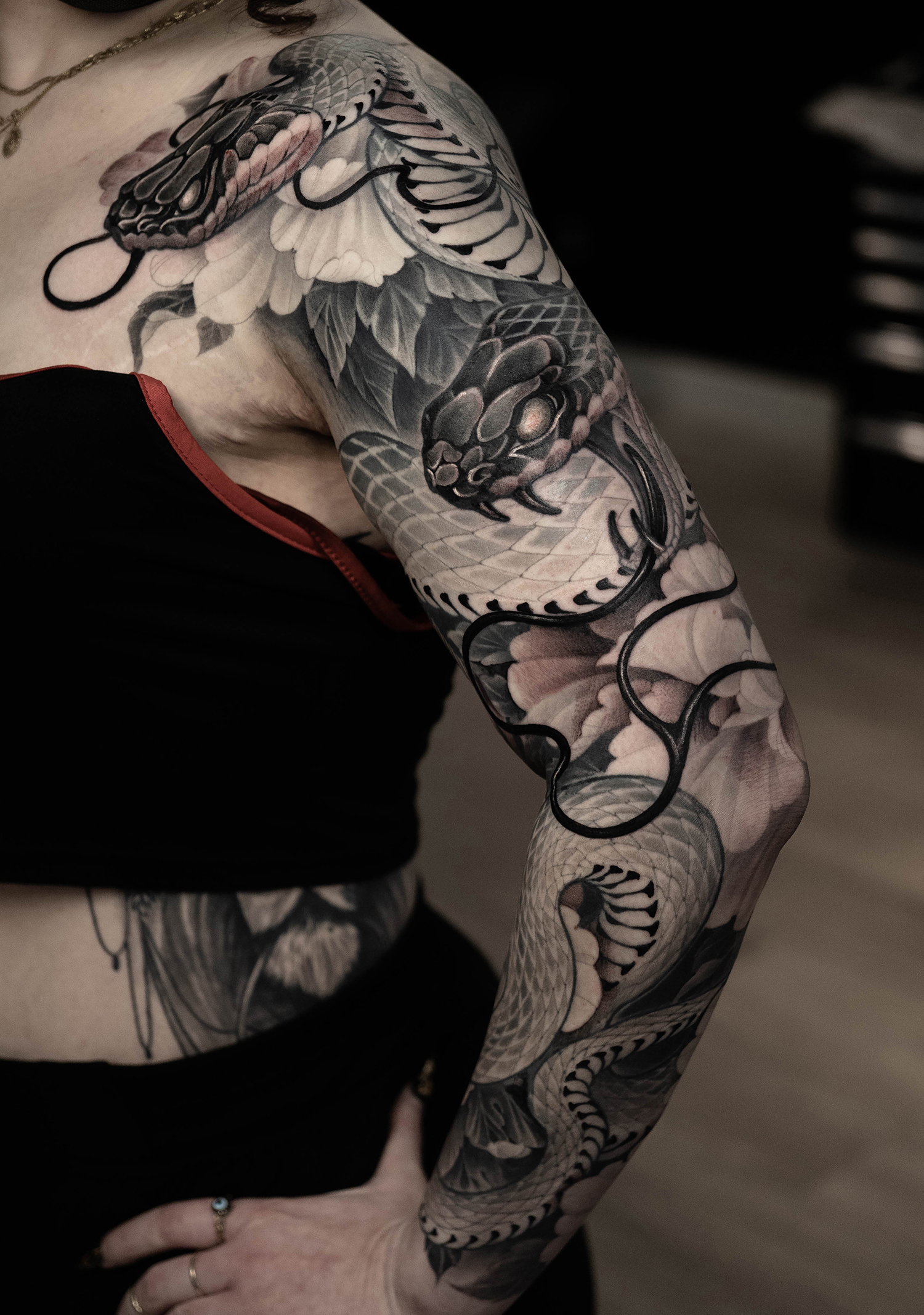
Fine Line Snake Tattoos
A fine line snake tattoo uses thinner lines and lighter visual weight instead of the bold outlines commonly associated with traditional Japanese tattooing.
The snake is particularly well suited to fine line work because its silhouette naturally creates movement even without a large amount of shading.
Fine line snakes work well on the forearm, upper arm, shoulder, calf, ankle, thigh, and ribs, either as standalone tattoos or combined with flowers and other imagery.
Japanese elements can also be incorporated into fine line tattooing, creating a lighter interpretation of traditional Japanese imagery.
Traditional Japanese vs. Fine Line Snake Tattoos
A traditional Japanese snake tattoo typically uses bold outlines, strong contrast, larger shapes, and supporting backgrounds. These designs are especially effective for sleeves, leg sleeves, back pieces, and larger body compositions.
A fine line snake tattoo uses thinner lines, more negative space, and a lighter overall appearance.
Neither approach is better. The right style depends on the placement, size, surrounding tattoos, and the visual effect you want.
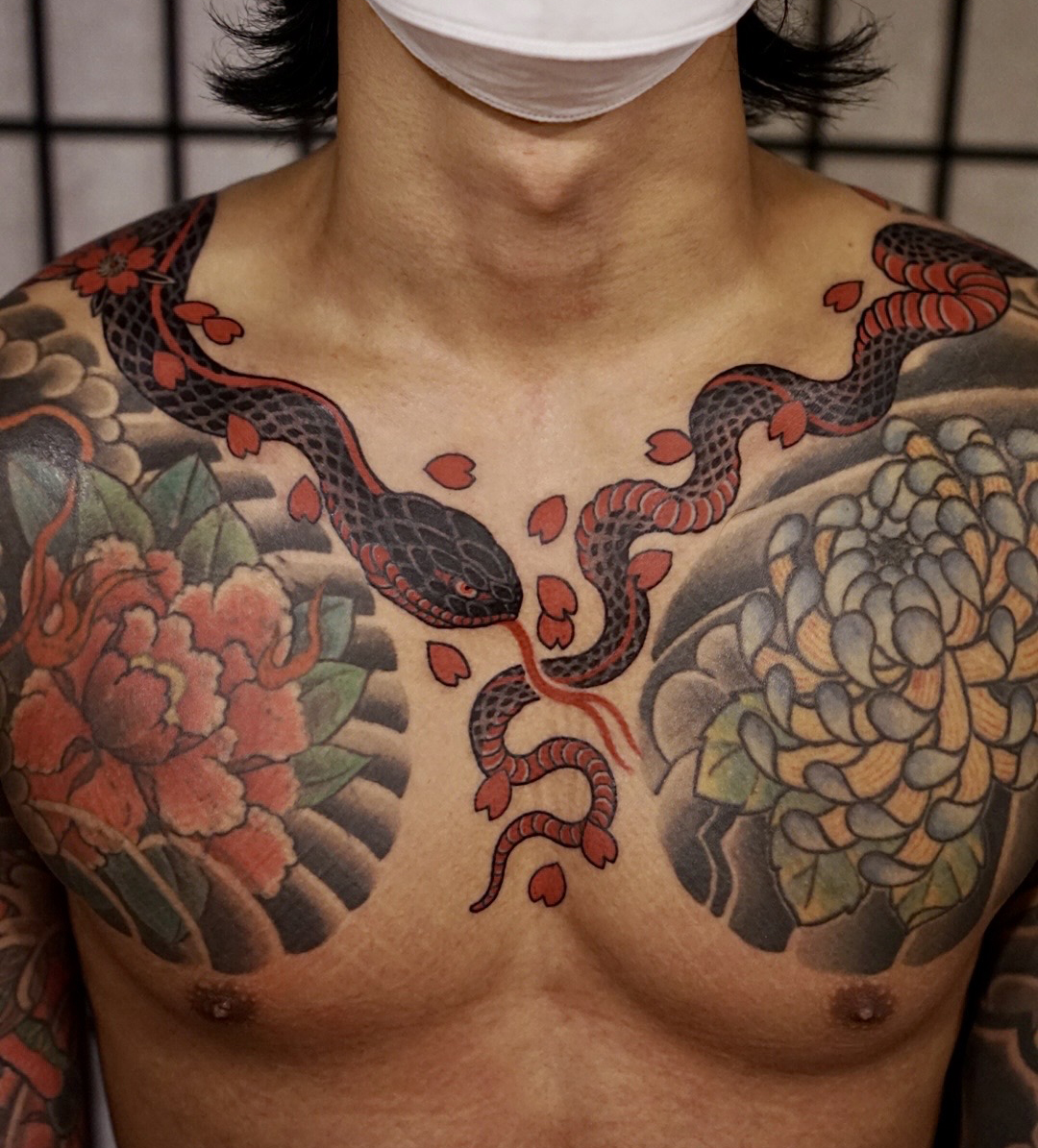
Designing a Custom Japanese Snake Tattoo
The most important part of a successful snake tattoo is not simply drawing a beautiful snake. It is how the snake moves across the body.
The position of the head, direction of movement, curves of the body, and relationship with surrounding elements all affect the final composition.
A design that looks good on paper may not necessarily flow correctly around an arm, leg, shoulder, or back.
For this reason, a Japanese snake tattoo should be designed specifically for the client’s anatomy rather than copied from an existing design.
At Oyabun Tattoo, every custom snake tattoo is developed around the individual body to create natural movement and a balanced composition.
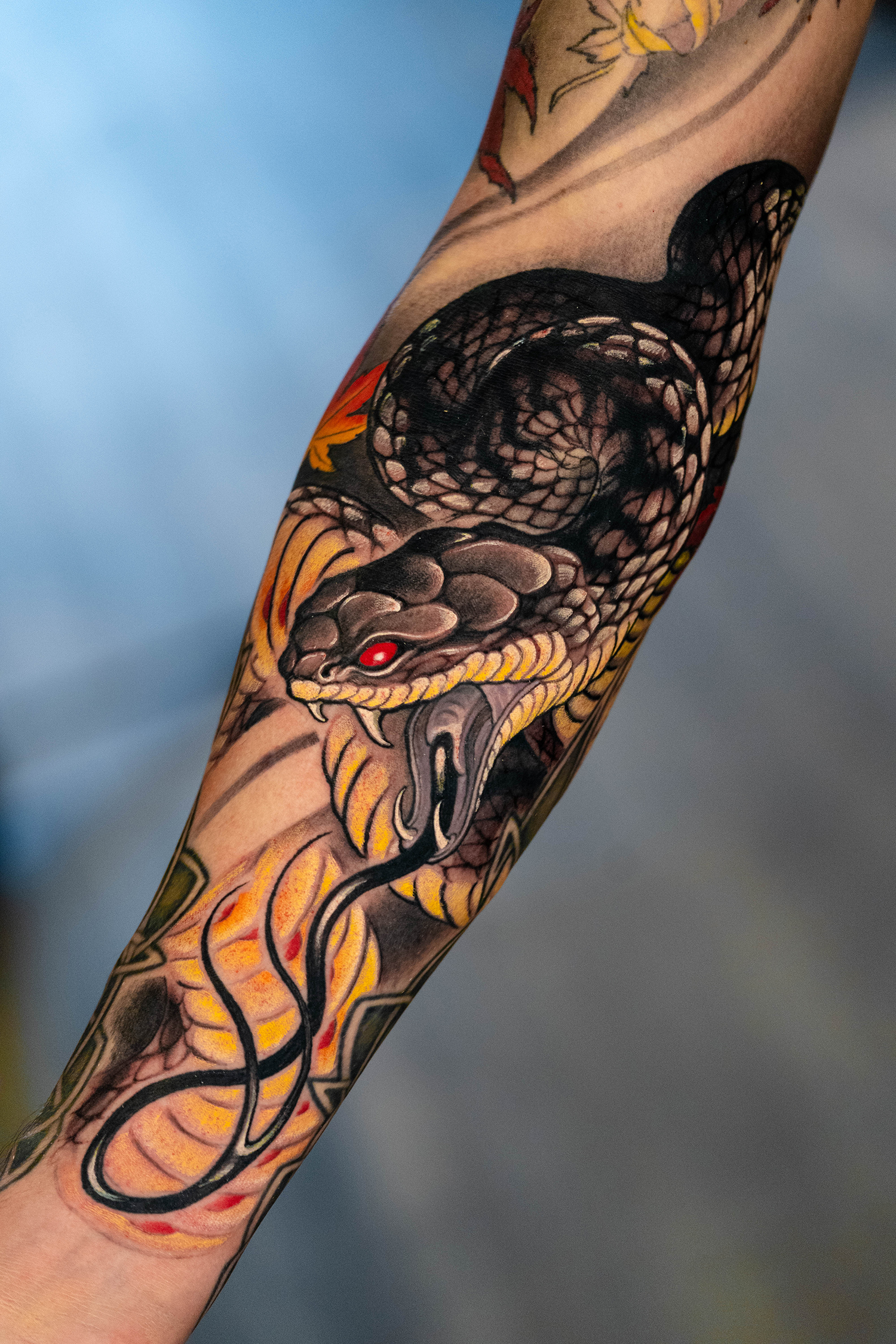
Japanese Snake Tattoos at Oyabun Tattoo San Diego
If you’re looking for a Japanese snake tattoo in San Diego, Oyabun Tattoo specializes in custom tattooing inspired by traditional Japanese art and irezumi.
Our artists create Japanese snake sleeves, leg sleeves, back pieces, black and grey snake tattoos, fine line snake tattoos, and Japanese-inspired custom designs.
Whether you’re planning a small standalone snake or a large Japanese composition, the design should work naturally with your body, remain readable over time, and feel unique to you.
Our goal is to combine strong composition with the visual traditions that have made the snake one of the most enduring subjects in Japanese tattooing.