
More Than Just a Beautiful Fish
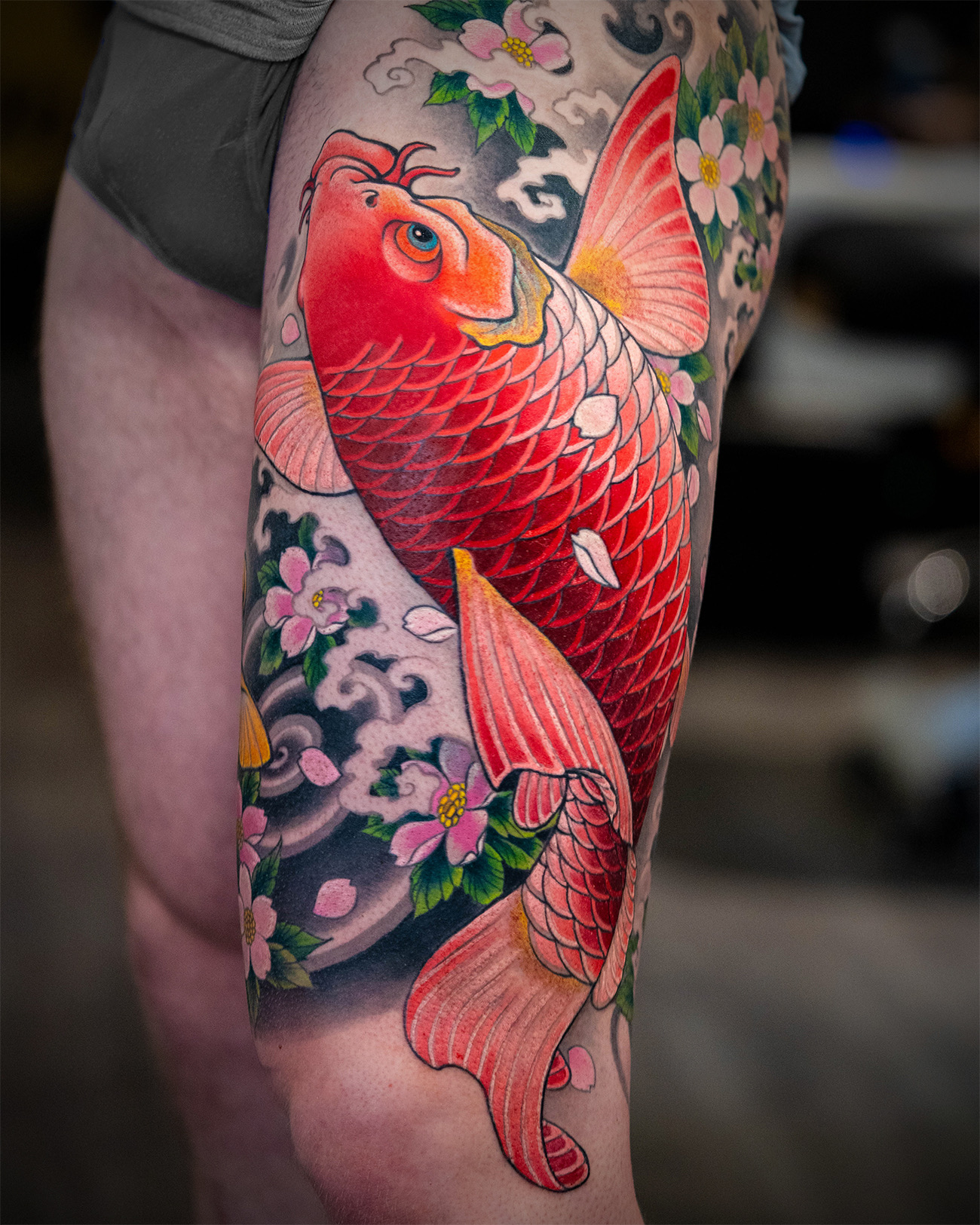
Walk into almost any Japanese tattoo studio, and you’ll likely find a koi tattoo in progress. While many people choose koi simply because they’re beautiful, the design has remained one of the most respected subjects in Japanese tattooing for centuries.
At Oyabun Tattoo in San Diego, koi tattoos are among the designs we create most often. Every client has a different story, but the reason the koi continues to endure is always the same its ability to represent perseverance, growth, and personal transformation.
What Does a Koi Fish Tattoo Mean?
The koi is best known for symbolizing determination.
Its symbolism comes from the famous Chinese legend of the koi swimming upstream against powerful currents before transforming into a dragon after reaching the top of the waterfall. Because of this story, koi tattoos have become a symbol of overcoming obstacles through persistence rather than luck.
For many of our clients, the koi represents surviving difficult periods in life, building a successful career, recovering from hardship, or simply becoming a stronger version of themselves.
Unlike many tattoo designs whose meanings have changed over time, the koi has consistently represented resilience for generations.
The History of Koi Tattoos in Japan
Although the legend originated in China, koi became deeply connected with Japanese culture during the Edo period, when ornamental koi were selectively bred into the colorful varieties we recognize today.
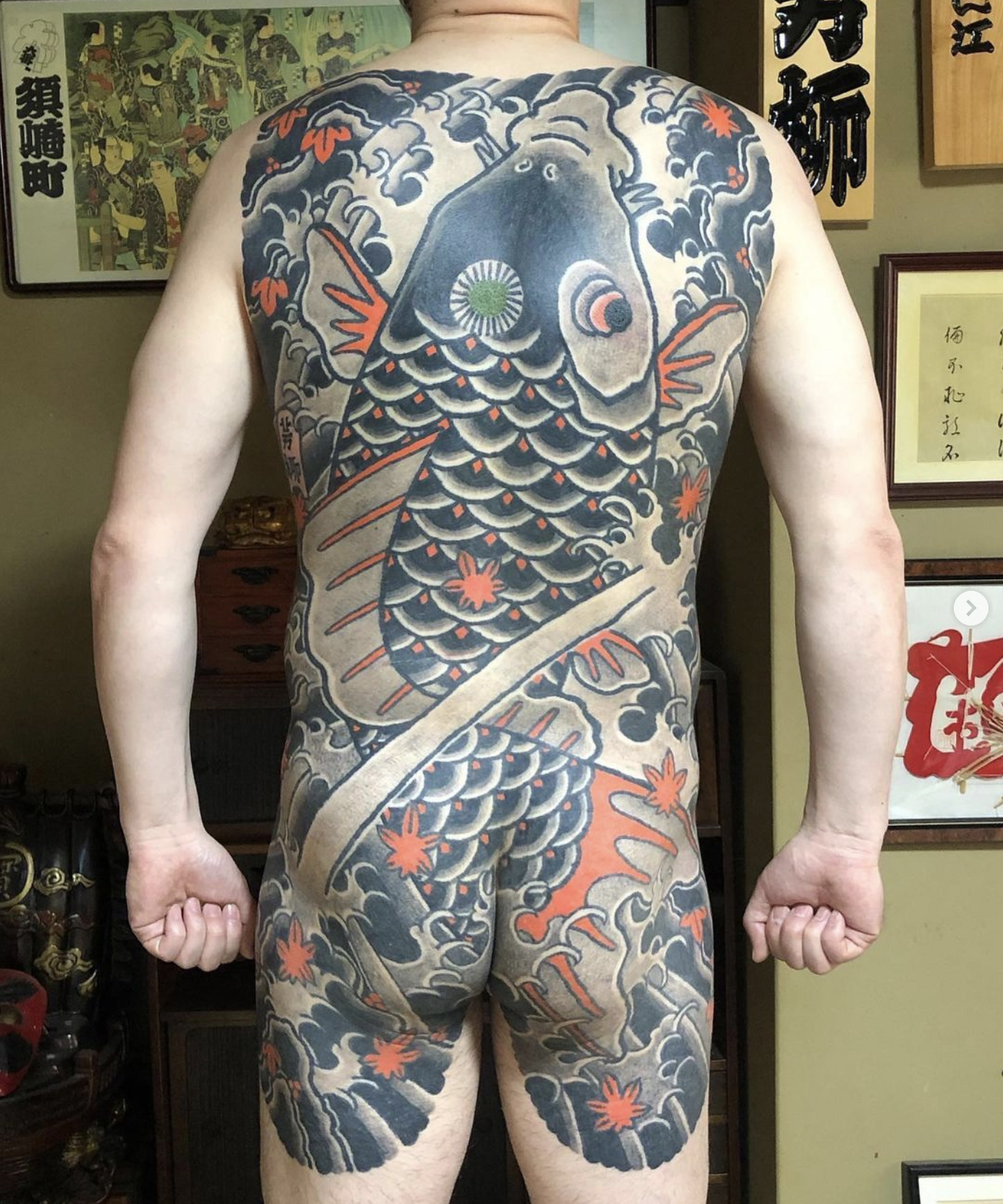
As Japanese tattooing evolved, koi naturally became one of its central subjects. Traditional body suits often combined koi with water, maple leaves, cherry blossoms, lotus flowers, or waves to tell a larger visual story rather than presenting the fish alone.
This storytelling approach remains one of the defining characteristics of authentic Japanese tattooing today.
The Cultural Significance of Koi Tattoos
For centuries, the koi has held a special place in Japanese art and culture. Admired for its beauty and determination, it became one of the most recognizable subjects in traditional Japanese tattooing.
Rather than representing a single idea, the koi symbolizes qualities that many people aspire to throughout life—perseverance, resilience, courage, and personal growth. These timeless meanings have made koi tattoos one of the most enduring and respected designs in Japanese tattoo art.
Today, people from all walks of life choose koi tattoos for their rich symbolism as well as their graceful movement and versatility. Whether incorporated into a full Japanese body suit or designed as a standalone piece, the koi continues to represent the journey of overcoming challenges and moving forward with strength.
Choosing the Right Koi Design
One of the biggest misconceptions is that every koi tattoo means exactly the same thing.
Small design choices can completely change the feeling of the tattoo.
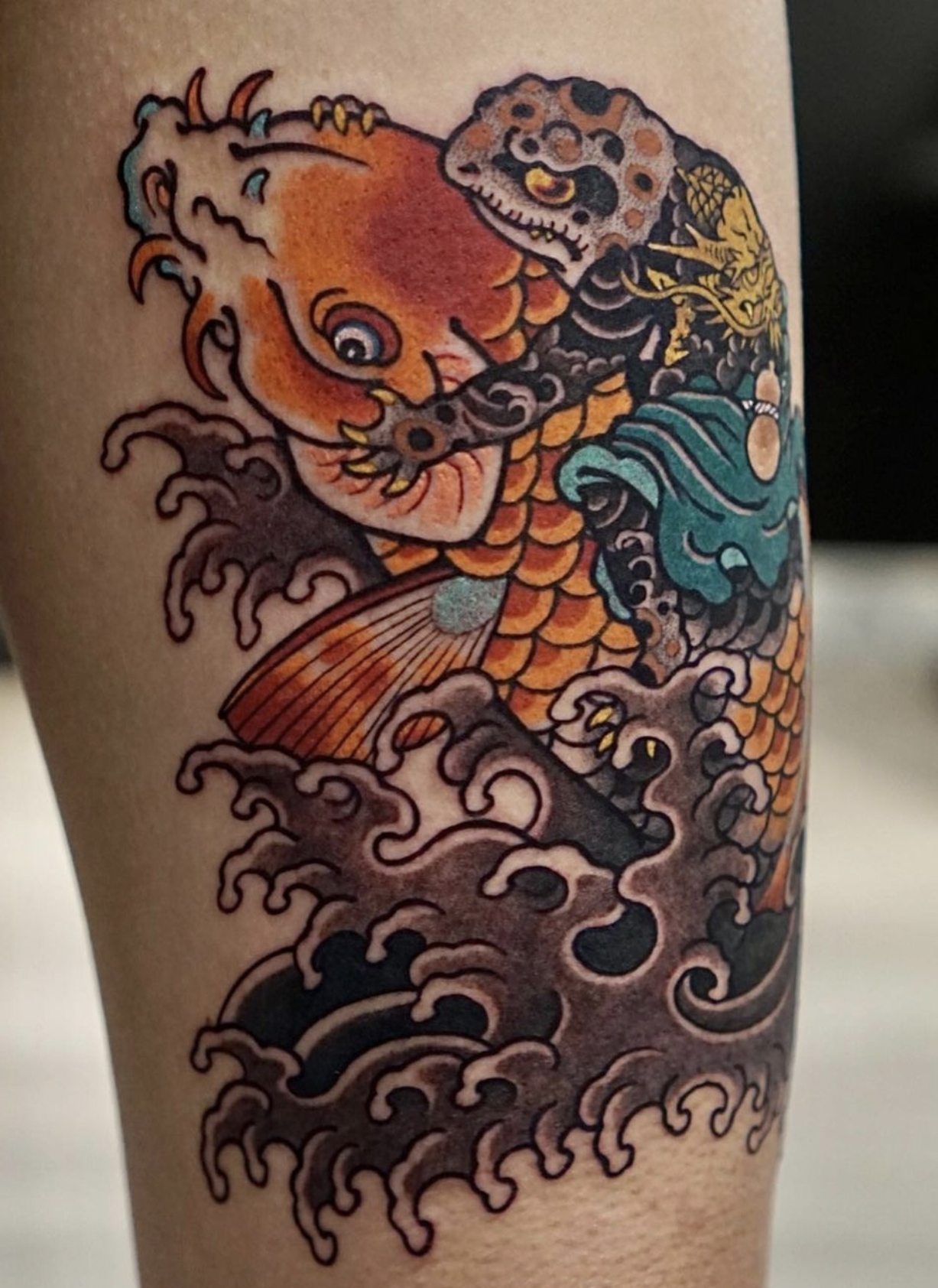
Color
* Black Koi – Overcoming major obstacles or difficult periods.
* Red or Orange Koi – Passion, family, love, and emotional strength.
* Gold Koi – Success, prosperity, and ambition.
* Blue Koi – Calmness, personal growth, and stability.
Direction
Many people believe a koi should always swim upward.
In reality, there is no universal rule.
Some clients intentionally choose an upward-swimming koi to represent a goal they’re still pursuing. Others choose a downward direction because they feel they’ve already overcome that challenge and have found peace.
The meaning depends more on your personal story than on a strict symbolic rule.
How We Design Koi Tattoos at Oyabun Tattoo
One thing we’ve learned after tattooing countless koi over the years is that no two clients choose one for exactly the same reason.
Some come in wanting a traditional Japanese sleeve.
Others simply love the movement of the fish.
During the consultation, we usually spend more time discussing composition than symbolism. In Japanese tattooing, the background is just as important as the koi itself. Elements like water flow, wind bars, flowers, rocks, and body placement all work together to create balance.
Instead of treating the koi as a single illustration, we design it as part of the entire body composition so the tattoo flows naturally with your anatomy and will continue to look cohesive as your collection grows.
Frequently Asked Questions
Does a koi tattoo have to be traditional Japanese?
Not necessarily. While koi originated in Japanese tattooing, many modern interpretations combine traditional symbolism with contemporary styles. The most important thing is choosing a design that fits both your body and your story.
Can women get koi tattoos?
Absolutely.
Koi tattoos have never been limited to one gender. We regularly design koi tattoos for both men and women, adjusting composition, color palette, and overall flow to fit each individual.
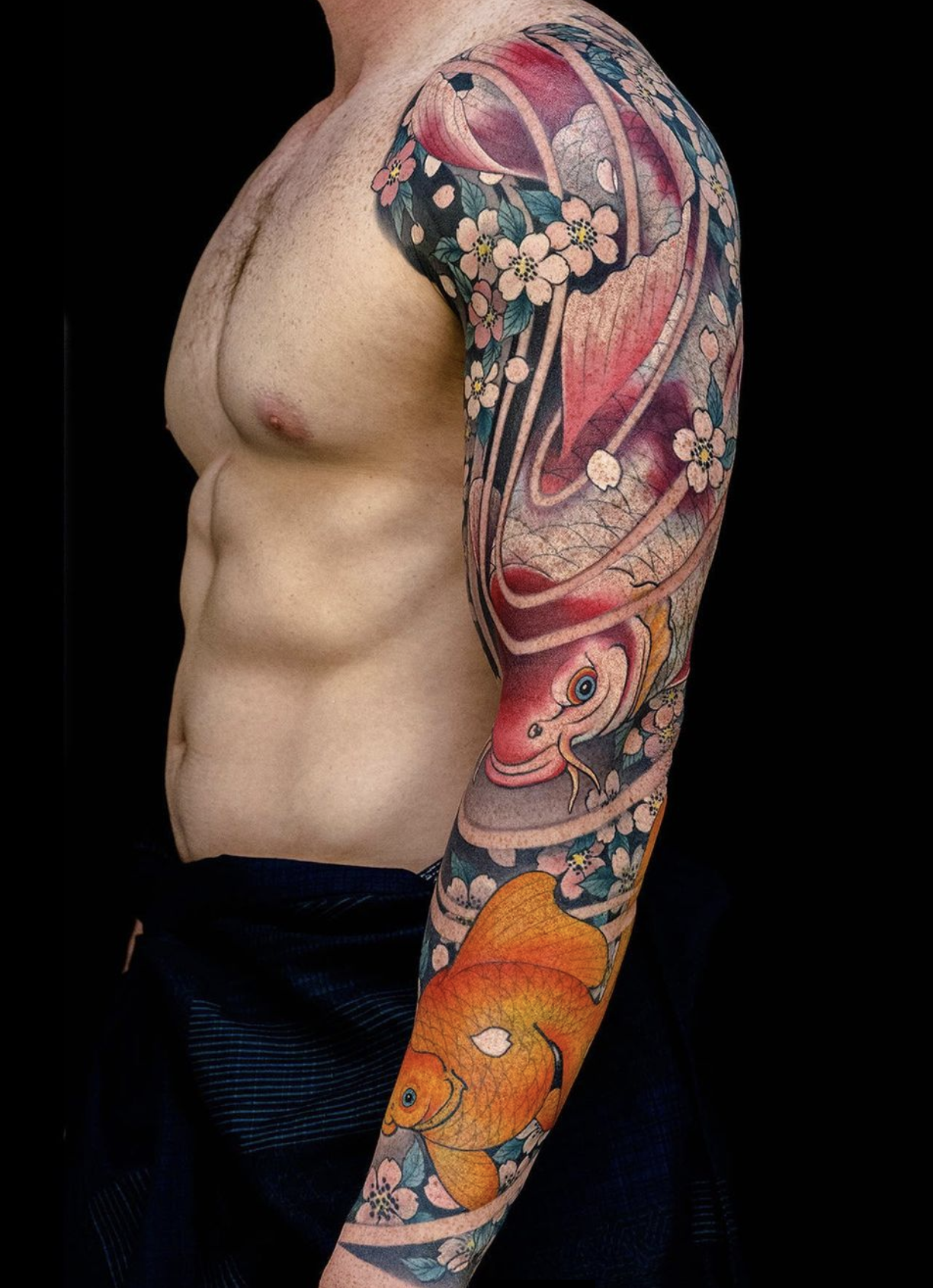
Is a koi tattoo good for a sleeve?
Yes.
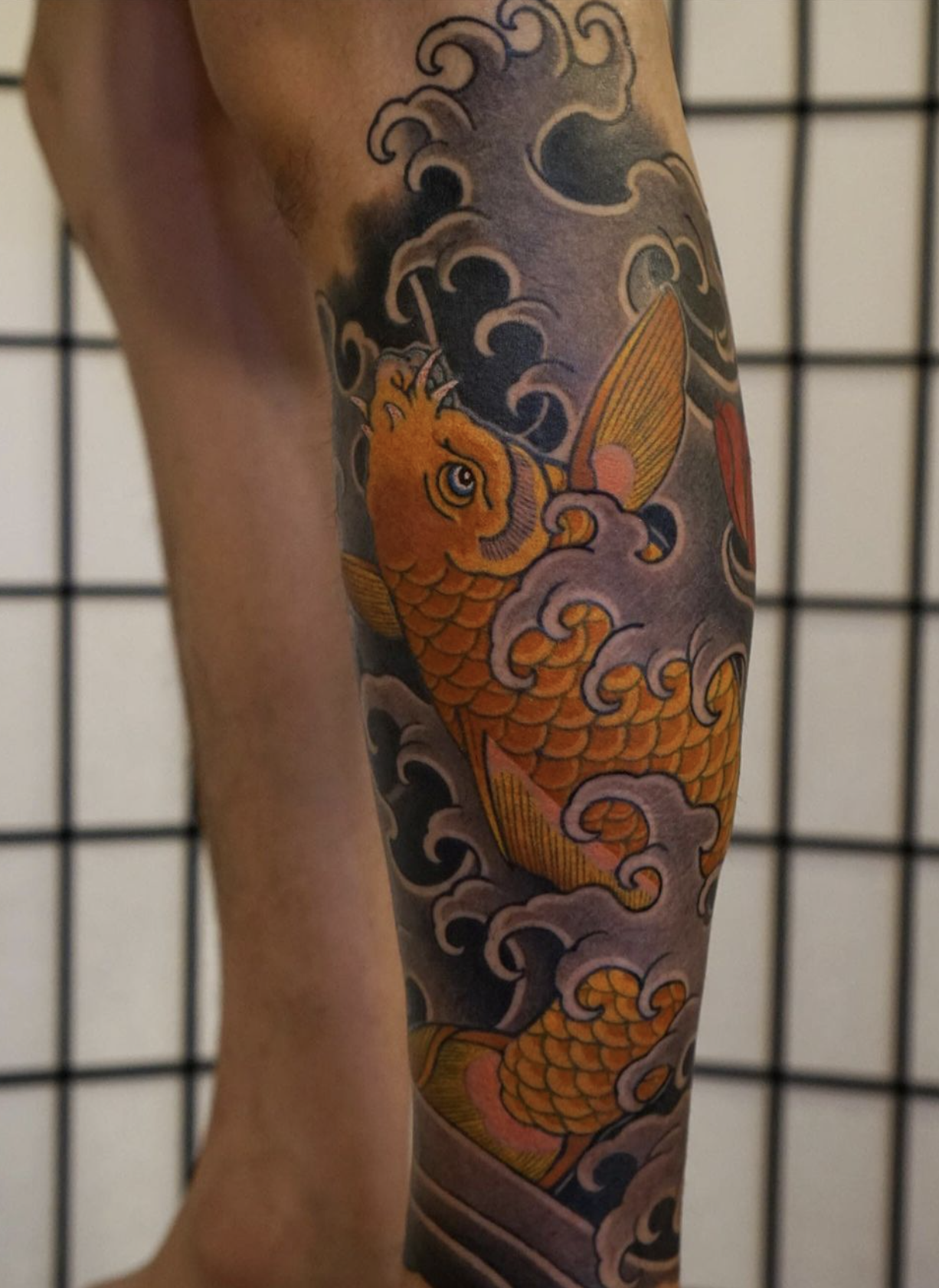
Because of their natural movement, koi work exceptionally well in sleeves, back pieces, chest panels, and leg sleeves. They pair beautifully with waves, flowers, dragons, tigers, and other traditional Japanese imagery.
Should my koi swim up or down?
There isn’t a single correct answer.
Rather than following internet myths, we recommend choosing the direction that best reflects your own journey and works naturally with the overall composition of your tattoo.
Japanese Koi Tattoos in San Diego
At Oyabun Tattoo, we specialize in custom Japanese tattooing rooted in traditional composition while adapting every piece to the individual wearing it.
Whether you’re planning your first koi tattoo or a full Japanese body suit, our goal is to create artwork that remains meaningful not only today, but decades from now.
If you’re looking for an experienced Japanese tattoo artist in San Diego, we’d be happy to help you design a koi tattoo that reflects both the tradition of Japanese tattooing and your own personal story.